

















Sewing Tips for Quilting with Bernina Machines
Successful machine quilting relies on control. Multiple fabric and batting layers need to feed consistently, stitches need to remain balanced, and the machine needs to respond accurately as you move between piecing, straight-line quilting, free-motion work and finishing.
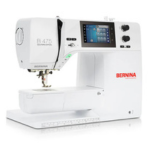
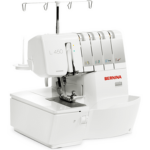
This is where your machine setup and accessories can make a significant difference. Bernina machines offer quilters a range of functions and specialist accessories designed to support accurate, controlled sewing across different quilting techniques.
Whether you already quilt with a Bernina or are exploring what your machine can do, these practical quilting tips for NZ makers can help you refine your setup and get more from your equipment. We will also look at how the right Bernina machines & sewing accessories can support different stages of the quilting process.
Why Choose Bernina for Machine Quilting?
Accuracy matters most when a project moves from piecing individual sections to quilting through multiple layers. Consistent stitching, controlled fabric movement and the ability to adjust your machine to the project all contribute to the finished result.
Bernina machines are known for precise stitch formation and give quilters control across a broad range of sewing applications. When working through a quilt sandwich, that consistency helps maintain an even result as fabric thickness and direction change.
Fabric feeding is another important consideration. Selected Bernina machines offer dual-feed functionality, which supports more even movement of fabric layers through the machine. This can be particularly useful when working with larger sections or techniques where shifting between the quilt top, batting and backing needs to be minimised.
The breadth of available accessories also gives Bernina quilting considerable flexibility. You can choose different presser feet and accessories for piecing, straight-line quilting, free-motion quilting, ruler work, and binding, rather than expecting one setup to perform every task equally well.
For experienced quilters, that ability to configure the machine around a particular technique is one of the key advantages of the Bernina system.

Bernina NZ Quilting Tips for Better Results
Choose the Right Presser Foot for the Technique
One of the most useful ways to improve sewing machine quilting is to match the presser foot to the work you are doing.
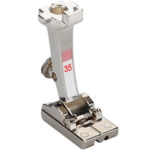
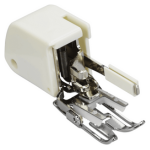
The Ribbon Rose stocks a wide selection of presser feet, including options suited to different quilting stages and styles. A patchwork foot can support accurate piecing and seam allowances, while walking and dual-feed options help manage layers during straight-line quilting. Free-motion and specialist quilting feet provide greater freedom when the fabric needs to move independently beneath the needle.
Rather than treating the presser foot as a general-purpose accessory, consider what you need it to control. Seam accuracy, visibility around the needle, fabric feeding, and freedom of movement can all influence which option is best for a particular stage of the quilt.
Test Your Tension on the Complete Quilt Sandwich
Thread tension affects how the upper and bobbin threads meet within the quilt layers. When the balance is right, the stitch should look consistent from both the front and back, with neither thread pulled noticeably through to the opposite side.
Before quilting the finished piece, create a test sandwich using the same top fabric, batting, backing and thread. Begin with the machine's usual settings and assess the result before making small adjustments.
Loops or visible imbalance can indicate that the tension needs attention, but don't adjust tension in isolation. Thread choice, needle, fabric and batting can all affect stitch formation. Testing the complete combination gives you a much more useful result than experimenting directly on the quilt.
Bernina's adjustment controls let you refine the setup for the materials you are actually using, which is especially valuable when moving between different quilt constructions and threads.
Control How the Quilt Moves Through the Machine
Even feeding becomes more challenging as a quilt grows in size and weight. If the layers shift independently, you can end up with puckering, distortion or uneven stitching.
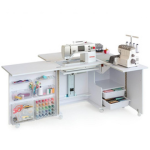
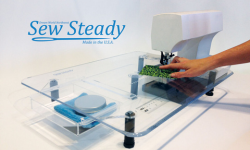
For straight-line quilting, use the appropriate feeding system or presser foot for your Bernina model, and let the machine move the layers rather than pulling the quilt from behind. Support the quilt's weight on your work surface so it doesn't drag against the machine as you sew.
Free-motion quilting requires a different approach. Here, the maker controls the direction and rate of fabric movement, so finding a comfortable relationship between machine speed and hand movement becomes essential.
Whichever technique you use, controlling the quilt around the machine is just as important as controlling the stitch itself.
Use Stitch Selection with Purpose
Machine quilting does not have to be limited to a standard straight stitch. Depending on your Bernina model, built-in stitch options can introduce texture and detail across borders, individual blocks and other areas of the quilt.
Decorative stitches can be effective, but they work best when chosen to complement the piecing rather than compete with it. Feather, scallop, and other patterned stitches can create defined borders or accent specific sections, while simpler stitching can let detailed fabric or patchwork remain the focus.
Always test unfamiliar stitch combinations on your sample sandwich first. This lets you assess stitch density, thread choice and how the design looks through the complete quilt layers before committing it to the finished piece.
Match Your Needle & Thread to the Quilt
Machine settings and presser feet are only part of the setup. Needle and thread choice also affect stitch quality, especially when you sew repeatedly through a quilt top, batting, and backing.
Choose a needle appropriate to the fabric, thread and technique, and replace it when necessary rather than waiting for obvious problems to appear. A worn or unsuitable needle can cause skipped stitches, damaged thread, and inconsistent results.
Thread weight also affects the appearance of the quilting. A more visible thread can make the stitching an intentional design feature, while a finer or closely matched thread keeps the focus on the piecing and fabric.
For sewing machine quilting, consider the machine, needle, thread, foot and quilt sandwich as one working system. Changing one element can affect the others.
Set Up Your Bernina Around the Way You Quilt

No single Bernina setup suits every quilt. Piecing demands accuracy, straight-line quilting requires controlled feeding, and free-motion work depends on freedom of movement and responsive machine control.
Better results come down to understanding which machine functions and accessories support the technique in front of you. Use the appropriate presser foot, test tension and stitches with your actual materials, support the weight of the quilt and make adjustments before moving on to the finished piece.
At The Ribbon Rose, you can explore Bernina machines & sewing accessories alongside presser feet, quilting fabrics, interfacing and other supplies for patchwork and Bernina quilting.
Browse the range online or visit us in-store to compare Bernina equipment and find the tools that suit the way you quilt.